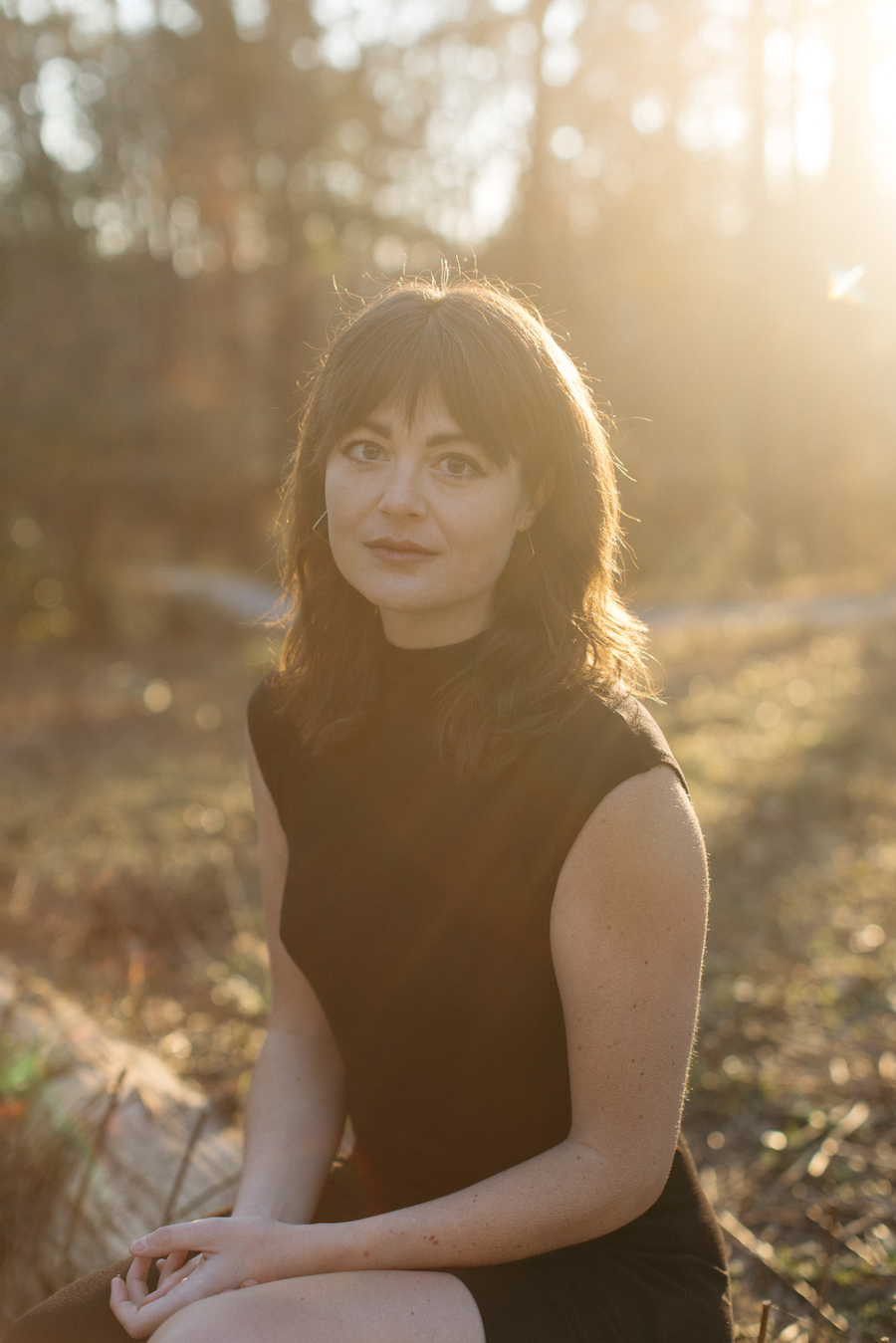
Elisa Faison on the Novel-in-Stories
Titus Chalk
September 18, 2026
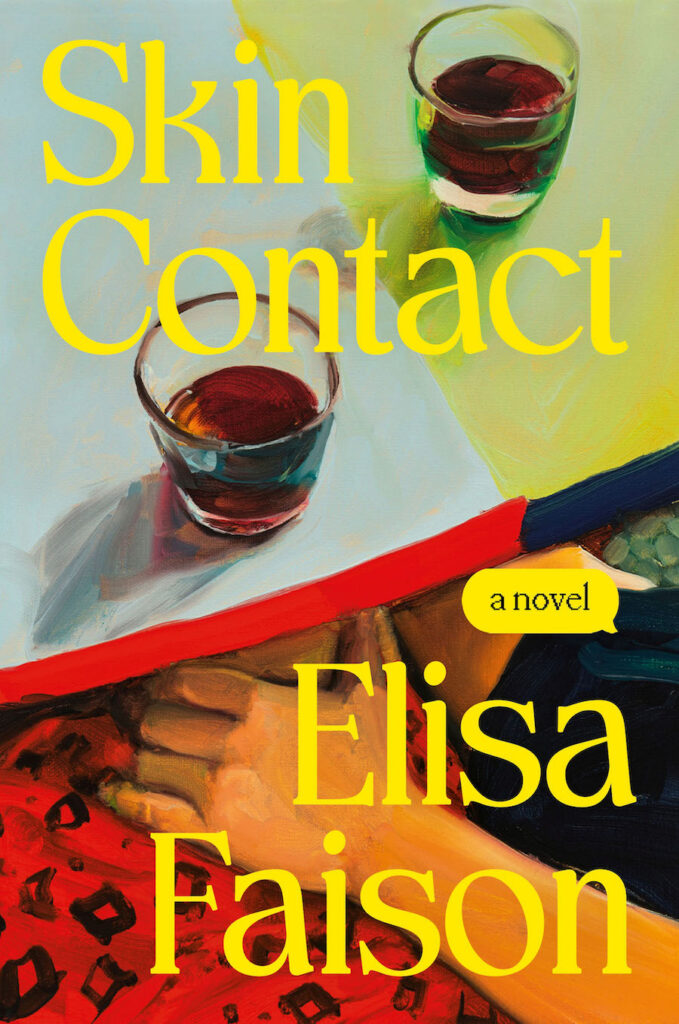
Grist published Elisa Faison’s story “Third Space”, about a polyamorous couple Ben and Frances, in issue 17. Since then, the story has become a chapter of Elisa’s debut novel Skin Contact, out now via Cardinal Publishing. Through interconnected stories, the novel explores the many challenges the couple face in opening up their marriage, as well as the layers of love and intimacy in their orbiting friends and family.
Elisa, did you ever feel that you were definitely a short story writer or definitely a novel writer? Was the novel-in-stories a way for you to bridge the gap between the two genres?
I’ve never really considered myself a short story writer, even though I did specifically set out to write these as short stories. My first foray into creative writing was actually playwriting. I was an English major in college, but did a certificate in creative writing, specialising in playwriting. The first time I wrote again after that, I just sat down and wrote a novel. That was in 2020, when I was putting off writing my PhD dissertation. We were all at home. My graduation had been postponed a year, and I was lying to my committee about what I was working on. I was secretly writing a more straightforward novel than Skin Contact. It was kind of a literary rom com. I got an agent with it, but that novel ended up dying on submission. Some of the advice I got was that I might stand out more if I had a few more publications. So I challenged myself to write “Motherlove,” which would become the first story in Skin Contact. I had tried to write other stories before, but I wanted to see if I could write a story I was really proud of; and I wanted to practice writing about sex because I felt really timid about it. That was the goal. I loved it, but as I say, I’m a bad short story writer because I loved it so much that I couldn’t let go of the characters.
It’s interesting that you wrote “Motherlove”, but your instinct was not to turn the page and write a chapter that followed on directly from it. Instead you wanted to jump ahead, or to leapfrog somewhere else in the story you had in mind.
Yes, I jumped a pretty significant amount in time. I really didn’t think that I would be writing this as a novel until I had three or four of the stories. I was still trying to write and place short stories, and if you see the original versions that got published, “Motherlove” is in Frances’s first-person point of view, in the past tense, and “Group Sex,” say, is third-person omniscient in the present tense. I was experimenting and even teaching myself stuff. They weren’t really all meant to go together in a collection; they were just what I was thinking about.
The more you worked on the project, though, did it beome apparent to you that this was a form in its own right? It certainly seems like you embraced it.
I’ve always loved interconnected short stories. The first book I really read like that was Jennifer Egan’s A Visit from the Goon Squad. It features quite a loose collection of characters whose stories take place across time, but it was called a novel. I think around the time I started putting mine together, even when I queried agents, I was calling it interconnected short stories for lack of a perfect word. I had read Night of the Living Res by Morgan Talty, too, which they’d just called short stories. But there are only two main perspectives, and it’s even tighter than A Visit from the Goon Squad. Anthony Marra’s The Czar of Love and Techno, where a minor character from one story is the main character in the next, was called interwoven stories. And Homegoing by Yaa Gyasi (who’s from my hometown!) is a work where each chapter features a new generation, and yet it’s called a novel. So I didn’t know what was going on, genre-wise. There’s no agreed-upon term; but I really liked reading these works and having fun figuring them out. As a reader, I like to be confused for a minute and to have to sit with a work and think about how people are connected.
Whether we call it interconnected stories or a novel-in-stories, what do you think is behind the rise in this form?
After it occurred to me that what I was writing might be interconnected stories, it felt totally right. I was experimenting with what I was calling a polyamorous form. I wanted to feature more characters being brought into the main relationship, along with the reader, and to fully round them out as people in their own rights. I wanted the reader to feel a sense of jumping around, being intimate with someone, and then intimate with someone else. This form really reflected the theme, and that felt exciting to me – and like the right use of the form. Jennifer Egan was concerned with technology and whether or not we’re more interconnected in the internet age, so it works for her novel. And in Homegoing, the form is reckoning with the flow of history. Yaa Gyasi is depicting a family whose Ghanian origins are disrupted by the slave trade; the family is forced apart and half of that history is erased. So the disconnected style, I think, too, is reflecting her theme.
Increasingly, we’re putting together these little scraps to make up our world. But the publishing industry is really resistant to that. You’d think that with shorter attention spans, there would be more short stories published. But books like mine get marketed as novels and not interconnected short stories because, as my agent and publisher confirmed, they simply would not sell. It’s not lying to call it a novel; as a genre, it’s never really been defined. But it strikes me as strange.
You mentioned part of the attraction of this form to you was the way it translated your theme of polyamory. When you were working in the form, though, did you find it had other strengths as well?
Yes, I think it allowed me to move away from my initial idea of just focusing on the people who were in romantic relationships with Ben and Frances. I ended up writing a lot about Frances’s family, for example. I put in two chapters from her grandmother’s perspective, and then one that’s like scraps from her mom’s diary. That’s something you can do in a more straightforward novel, too, but here it let me give the reader information that Frances never figured out. Part of Frances’ backstory is a killing in her family that remains a secret to her. I wanted to show that Frances’s mom and grandmother protected her from knowing about it, and that it was this protection which allowed her to feel more free or confident. By including these snippets from other time periods and other perspectives, I could add to the theme without factoring them into the main plot.
What were some of the other challenges you hit upon, and some of the strategies or solutions you deployed to either knit things together or keep things distinct, depending on what you were trying to do?
It felt really important to me that everyone should come together at the end. I wanted for the major players, to some extent, to all tie into the final story. That felt like the right thing to do in terms of making it a cohesive novel. It also felt like the right thing to do to me in terms of having a polyamorous structure that’s really messy and exploded, on the one hand, but which also reflects many peoples’ experiences of polyamory; there can be a sort of neatening that happens after a chaotic opening period.
Part of what seems interesting or challenging about this kind of episodic form, is what falls between the cracks between chapters or stories. Did you find yourself wrestling over how to use exposition, over how much you needed to catch the reader up on things?
I think I originally re-explained who every character was at the beginning of every chapter, and a lot of that got cut, which was good. But I also let a lot of things happen off-page. I really didn’t want this novel to feel preachy. For example, Frances undergoes some significant character growth between her second-to-last and her last chapter. There’s a hint of how and why that’s going to happen, and then we kind of pick up after it’s happened. To me, reading that can feel really satisfying. It’s not so hard to imagine how she resolved some of her apprehension and confusion and loose threads from those glimpses, but it might have been a little bit too explicative to show the reader all the conversations that she needed to have to sort out her feelings. I just wanted to trust the reader and let them put the pieces together, because I like being trusted as a reader.
I also never included a chapter where Ben and Frances sit down and describe every single rule and boundary of their open marriage. I wasn’t writing a how-to book. The reader can piece things together and follow the emotional threads without me telling them exactly what’s happening or how to feel.
In terms of other thematic threads, it does feel like there’s this dance between Eros and Thanatos throughout the whole novel.
I think so. It’s been made clear to me that I’m accidentally writing about death all the time, and I don’t mean to be. A lot of people say things, either positively or negatively, like “I thought this was going to be a novel about sex, but it’s actually a novel about grief and aging.” And I think my answer to that is always: well, that doesn’t mean it’s not about sex. Sex is the most driven by your body that you can be. Being pregnant or having sex, you’re more aware of how you look, how you feel, how your body has changed. All these things that are percolating in our minds just come to the fore. It’s a grasping of vitality in some way. Or, for some people, it can be self-effacing. That’s always there – and so writing sex is actually a very good way to write about these other themes. I’d love for more people to do it!
It does feel somewhat fraught these days for straight male authors to try and do that. Should we count ourselves lucky to have such a profusion of, say, women writers at the moment who are tackling the subject? That is 100% something I’m noticing. There are some really great male authors writing about sex in an interesting way, and it does tend to be queer authors like Brandon Taylor or Garth Greenwell or Douglas Stewart. They’re writing these really visceral, interesting sex scenes. And I don’t know what that means for straight male authors. There’s such a fraught history there, like you say. Take Philip Roth, for instance. Everyone remembers — or maybe only I remember and it tells you something about me — the part in Portnoy’s Complaint where he masturbates into his sister’s bra. I think I read that when I was fifteen or something, and I will never not think about it. Why am I always thinking about Philip Roth? That’s so fucked up of me! Either way, there is a fraught history of just sexualizing the female character in those sex scenes and not giving her agency. A lot of male authors feel concerned about that, and I don’t know: It’s really nothing to worry about if you just remember women are people, too!